Thomas Stickland completed his bachelor of engineering in mechatronics engineering at McMaster University, in May 2026. He spent all four years as an active member of the Propulsion Controls and Modelling (PCM) subteam in the EcoCAR Electric Vehicle Challenge. During his undergraduate studies, he focused on vehicle communication systems, controller integration, real-time embedded code execution, and diagnostic systems for advanced electric vehicle platforms. Through his work on EcoCAR, he developed extensive experience in supervisory propulsion control, hardware and software-in-the-loop testing, and vehicle systems integration. Thomas is now pursuing a master of applied science in electrical and computer engineering at McMaster University. As he begins graduate studies, he is serving as PCM Lead for McMaster’s team in the EcoCAR Innovation Challenge. His research focuses on traction systems modelling, propulsion control systems, and validation of advanced vehicle control architectures.
Full Profile
Thomas Stickland is a graduate researcher in electrical and computer engineering at McMaster University. His work focuses on electrified vehicle systems, supervisory propulsion control, powertrain modeling, and validation for automotive control systems.
His interest in electrified transportation began at a young age. Thomas developed an early fascination with electric vehicle technology and the future of automotive electrification. Throughout high school, this interest expanded through his involvement in robotics, where he gained hands-on experience in electrical systems, controls, and mechanical design. These experiences ultimately led him to pursue mechatronics engineering at McMaster University, where he began developing the technical foundation that now defines his research interests.
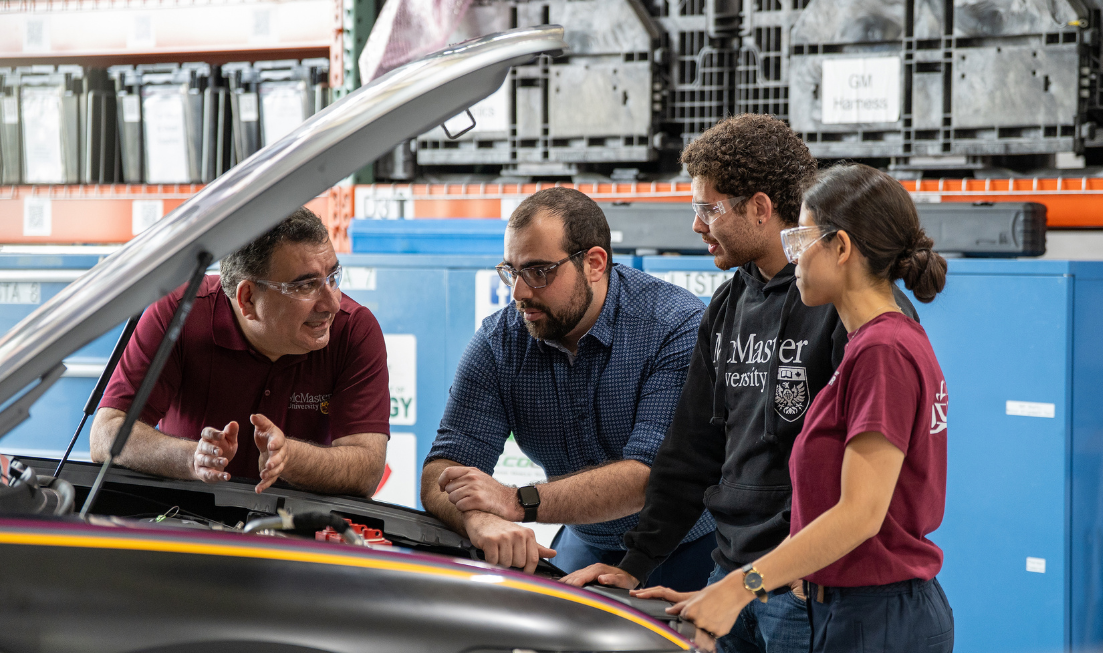
Throughout all four years of his undergraduate degree, Thomas was a member of McMaster’s EcoCAR team, where he worked on the Propulsion Controls and Modelling (PCM) subteam for the EcoCAR Electric Vehicle Challenge. He worked extensively on real-time control system development, controller integration, CAN communication architecture, vehicle diagnostics, and cybersecurity implementation for GM Global B vehicle networks. His contributions included establishing workflows for deploying code-generated Simulink controllers onto Speedgoat real-time hardware, integrating communication interfaces between team-developed and OEM vehicle systems, and optimizing controller execution for computationally intensive real-time applications. Thomas supported the implementation of HV energization and de-energization sequences between the GM battery system and electric drive units.
Alongside his work with EcoCAR, Thomas completed engineering co-op placements. These experiences expanded his experience in PCB design, harness development, embedded systems, automotive diagnostics, and high-voltage control integration for electrified propulsion systems.
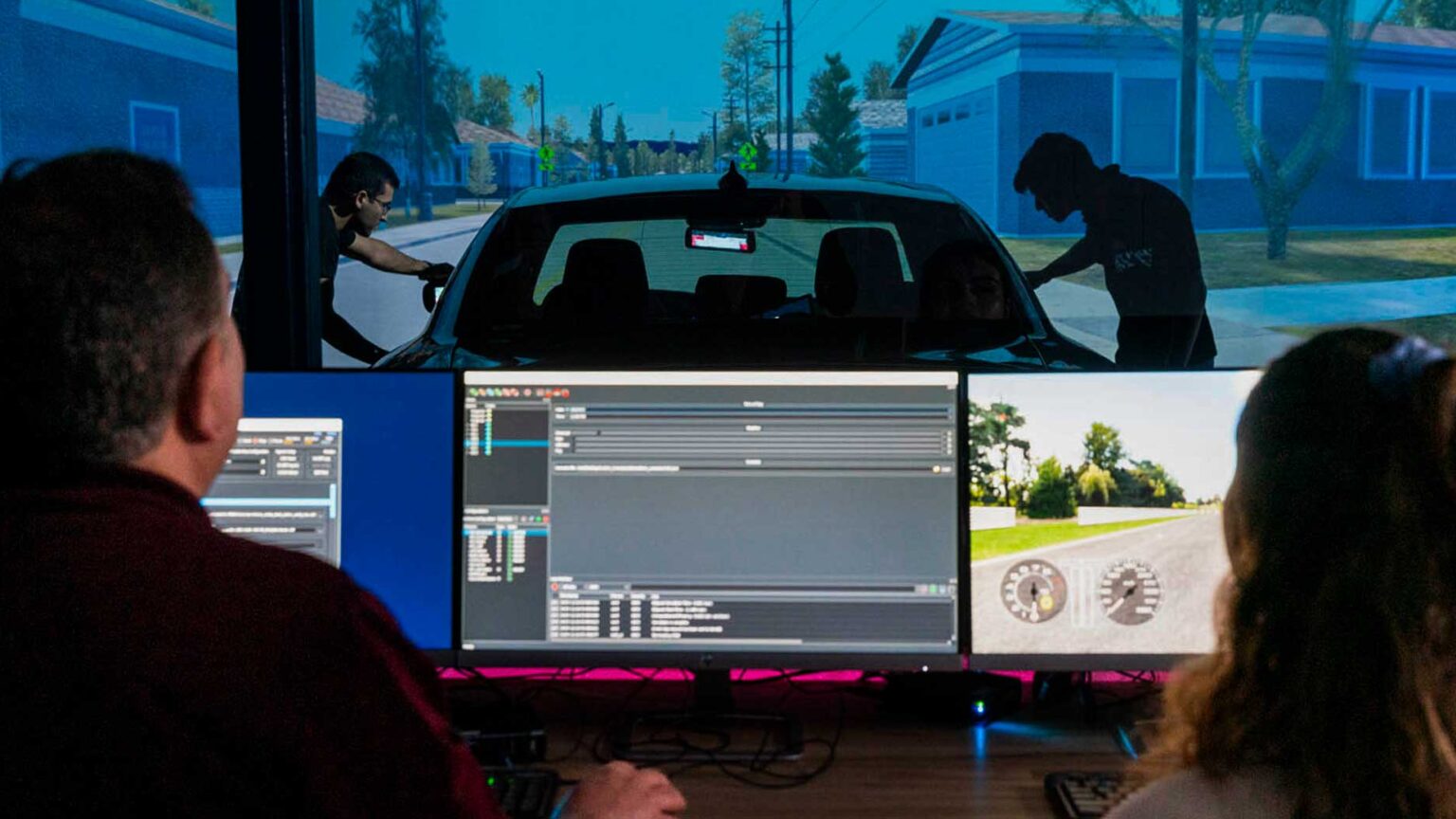
Thomas began his master’s in 2026. He currently serves as Propulsion Controls and Modeling Lead as McMaster transitions to the EcoCAR Innovation Challenge. His research focuses on traction-system modeling and simulation, supervisory propulsion control, hardware- and software-in-the-loop testing, automotive control software validation and verification, and electric machine control. Through his research and industry experience, Thomas has developed a strong foundation in designing, integrating, and testing advanced control systems for next-generation electric vehicles.